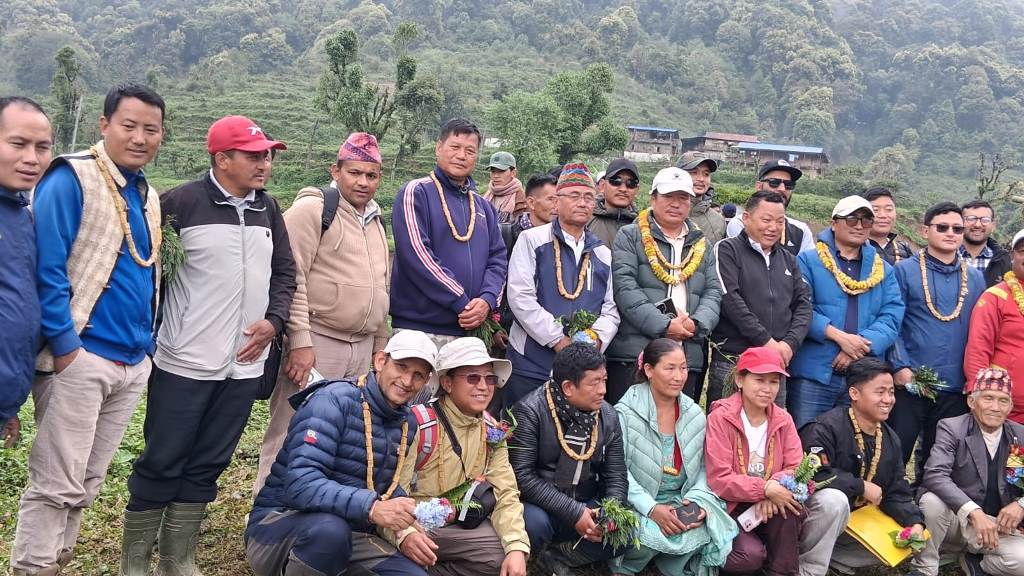
The Honey Hunting Festival in Nepal was successfully organized on May 22 & 23 at the spectacular Teraha Cliff, Khotang. In coordination with the Koshi Province government, Kepilasgadhi Rural Municipality hosted the event using traditional methods and locally crafted equipment passed down through generations. Teraha is just one of the many notable, towering cliffs that define the rugged landscape of Phedi (Ward No. 1, Kepilasgadhi).
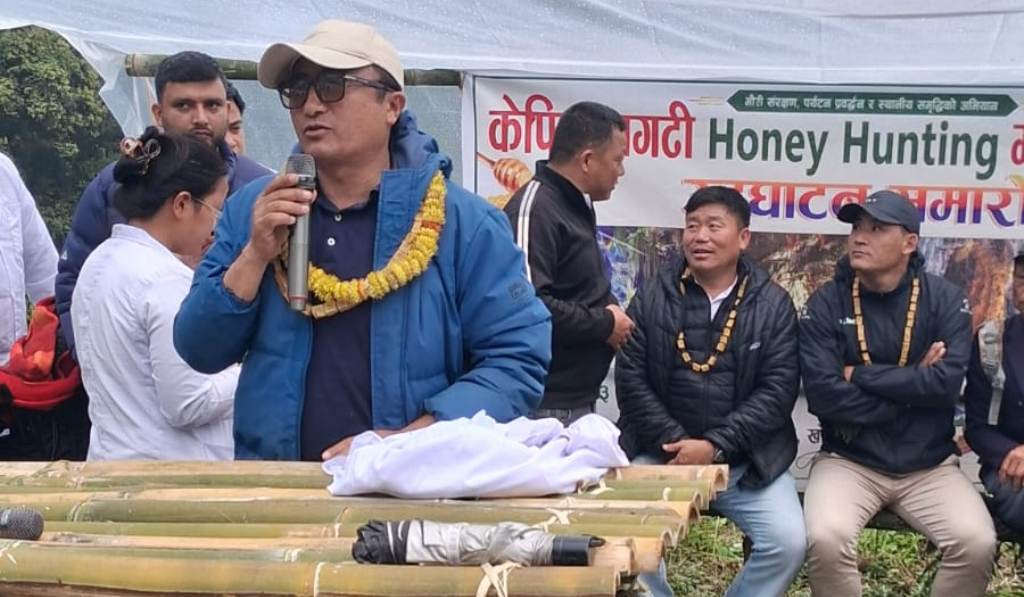
This year, expert honey hunters successfully collected honey from nine out of eleven wild hives. Thousands of local visitors and domestic tourists gathered to observe the thrilling harvest and enjoy authentic local cuisine.
Boosting tourism along the Mundum Trail
Local hunters have been harvesting wild honey twice a year for decades. This festival was organized with the dual purpose of preserving this ancient tradition and promoting eco-tourism in the region. Specifically, the event helps put a spotlight on the Mundum Trail, which is enlisted as one of Nepal’s top 100 must-visit tourist destinations. The geography of Kepilasgadhi is ideal for wild bees, with numerous hives found across cliffs like Teraha, Makhamla, and Kuhire Bhir.
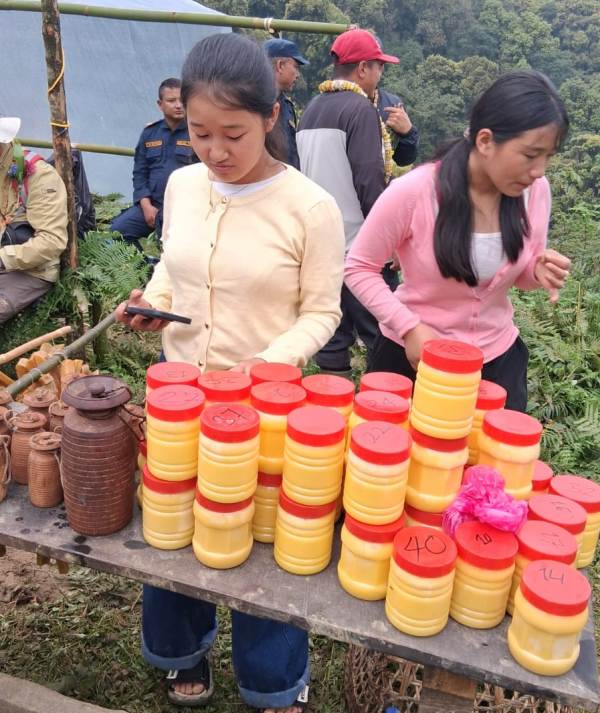
Showcasing Sampang Rai culture
Beyond the adventure of the harvest, Phedi is deeply rooted in rich Sampang Rai culture. The Sampang Rai community has its own distinct language, traditions, and lifestyle. The festival provided a unique cultural exchange platform, allowing tourists to immerse themselves in Rai hospitality and cultural performances alongside the honey hunting exhibition.
A rare and valuable Himalayan commodity
Despite being a deeply ingrained cultural tradition and a lucrative source of income, traditional honey hunting is becoming increasingly rare. Wild cliff honey is a premium product with massive demand both in Nepal and international markets due to its medicinal properties.